
A smart port is a development model that uses technologies such as the Internet of Things, big data, and artificial intelligence to improve port operational efficiency and service quality. With the growth of global trade and the development and application of advanced technologies, the construction of smart ports in some countries has entered a stage of rapid development. In recent years, countries such as the Netherlands, Singapore, and the United Arab Emirates have accelerated the automation and digital transformation of port facilities and equipment, strengthened intelligent management of port operations, and continuously enhanced the competitiveness of port logistics systems.
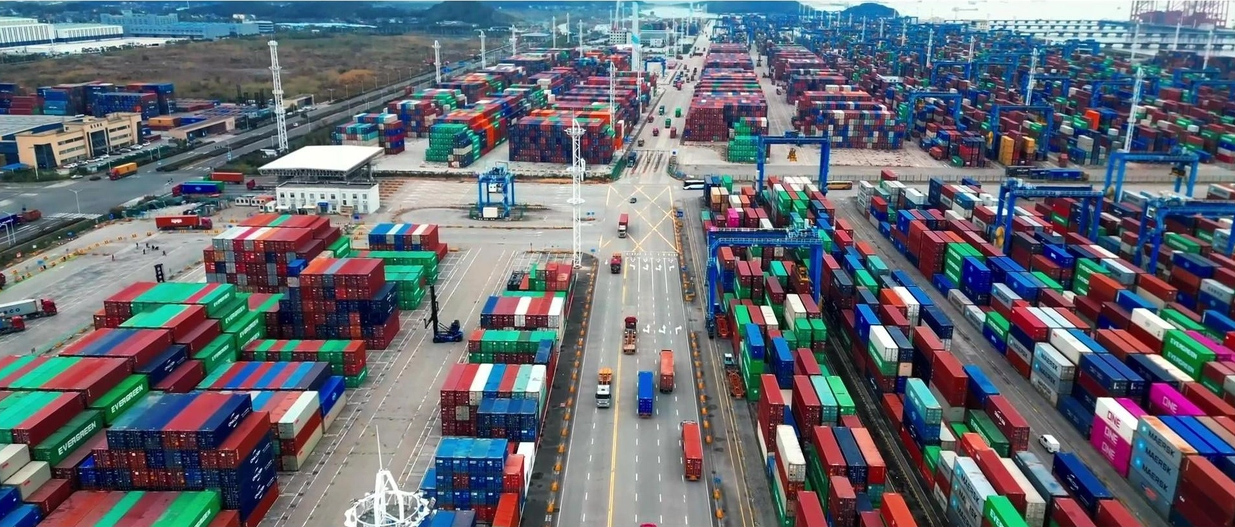
Port of Rotterdam, the Netherlands — Introducing Drone Patrols and Strengthening Digital Logistics
As one of Europe's largest ports, the Port of Rotterdam handled 438.8 million tons of cargo in 2023. It is also a pioneer in European terminal automation: most container loading and stacking is now controlled by computers and completed by automatic cranes (Photo 1, taken by Niu Ruifei, reporter of People's Daily). In recent years, the port has continuously driven technological innovation to enhance intelligence.
By the end of 2022, the port introduced drones for routine inspections, conducting weekly patrols to monitor ship refueling, water pollution, cargo transshipment, hazardous materials, air pollution, and on-board maintenance. During emergencies, drones can deliver medical supplies, ship parts, or cargo samples to the site immediately, significantly improving emergency response efficiency.
In January 2023, the digital platform "New Generation Logistics" went live, acting as the port’s "central processor" by collecting data on each ship’s berthing location, time, and cargo, and generating optimal unloading and loading plans within minutes. In 2023, 1 million containers used the platform, reducing transshipment time by 1/5. Currently, about 60% of land-sea freight volumes in the port are coordinated through this platform.
The 17-kilometer Container Exchange Route, operational since November 2023, connects multiple terminals, warehouses, and customs inspection stations, featuring 3 junctions, 5 railway crossings, and infrastructure like lighting, cables, traffic signals, and barriers. Using multi-trailer systems, terminal tractors with chassis, and trucks, this "container highway" enables efficient cargo transfer.
" The Container Exchange Route is highly innovative, significantly promoting the port’s intelligent construction and safe, efficient operations," said Bijdewijn Simons, CEO of the Port of Rotterdam Authority. "We will continue to advance port intelligence and efficiency to solidify its status as a global container hub."
Port of Singapore — Optimizing Operation Management Systems to Enhance Clearance Efficiency
As one of the world’s busiest container transshipment ports, the Port of Singapore handled 38.8 million TEUs (twenty-foot equivalent units) in 2023, ranking second globally. With six major terminals including Jurong, Keppel, and Tanjong Pagar (Photo 2, taken by Liu Hui, reporter of People's Daily), the port has proactively driven smart port initiatives in recent years.
Singapore launched the Maritime Industry Transformation Map in 2018, advocating technological R&D and leveraging emerging technologies like AI and big data analytics to optimize port operations. The updated 2022 version further emphasized maritime innovation and smart port development.
The one-stop digital port platform allows shipping companies to submit all customs clearance documents to multiple government agencies in one go, saving the maritime industry about 100,000 man-hours annually. At the Singapore Maritime Data Centre, companies and agencies share real-time data on vessels, positions, and arrival/departure times. A new vessel traffic management system under development will provide comprehensive real-time maritime traffic updates and predict congestion hotspots.
In 2021, Singapore’s first maritime drone testing zone opened, where companies test drone technologies—from delivering parcels to ships and inspecting harbors to collecting weather data. The drone traffic management system can coordinate 500 drones simultaneously, ensuring safe operations. The government announced plans last year to build a drone port for maritime supplies.
Since 2018, the Maritime and Port Authority of Singapore, in collaboration with NUS and enterprises, has run an industry acceleration program to foster partnerships between tech startups and the maritime sector. The annual "Smart Port Challenge" invites domestic and international startups to propose innovative solutions, with winners receiving up to S$250,000 (US$1 ≈ S$1.3).
"As technology advances, maritime tech will increasingly impact the efficiency and sustainability of shipping and port operations," said Singapore’s Minister for Transport, S Iswaran. "Singapore has always supported emerging technologies in ports and actively seeks effective solutions."
Jebel Ali Port, UAE — Advancing Full Automation and Prioritizing Innovative Technology
Located southwest of Dubai, Jebel Ali Port is the largest port in the Middle East and one of the world’s top 10 busiest container ports, with 67 berths spanning 15 kilometers and an annual capacity of over 14 million TEUs. To meet surging container traffic, Terminal 3 operates fully automated, integrating 18 internal systems for real-time tracking of quay crane operations, berth planning, yard management, and truck dispatch.
To address traditional container stacking inefficiencies, the port co-developed the world’s first elevated container storage system, stacking containers up to 11 stories high for robotic retrieval. This has significantly reduced non-productive container movements annually.
In May this year, DP World announced a partnership with freight company Einride to deploy 100 electric trucks at Jebel Ali Port. These connected, intelligent trucks use a central digital system to optimize freight efficiency, supporting ~1,600 container transports daily. Autonomous driving trials for electric trucks will begin next year, marking the Middle East’s largest port electrification initiative.
"Over 90% of global trade relies on maritime transport," said Ibrahim, head of IT at DP World. "In the digital era, port digital infrastructure is crucial for supply chain stability. DP World prioritizes innovative technologies to advance port intelligence."
Adjacent to Jebel Ali Port, the Jebel Ali Free Zone hosts over 9,000 enterprises, with China as a major trade partner. Sultan, Chairman and CEO of DP World, stated that smart port initiatives will further enhance global logistics connectivity, positioning Dubai as a key hub for global trade. Jebel Ali Port aims to serve as a bridge to facilitate Chinese goods entering markets in the Middle East, Africa, and Europe.
People's Daily, August 14, 2024, Page 15