Solutions
Solutions
Solutions
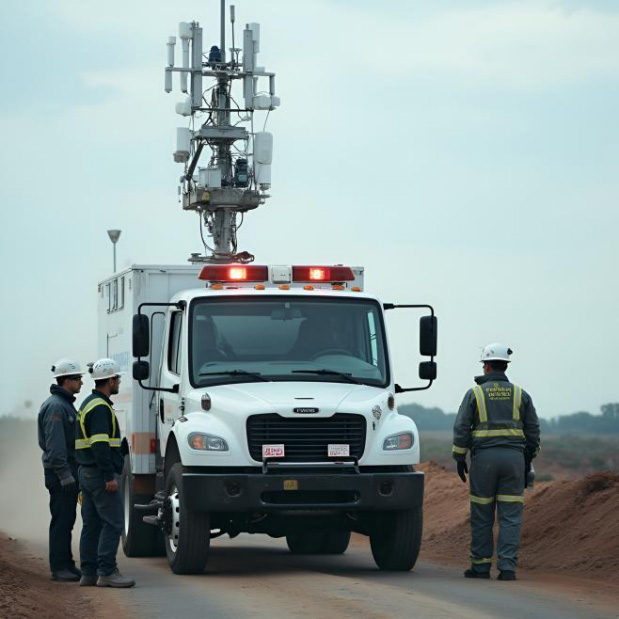
Smart Emergency Command & Communication Solution
Currently, various natural and man-made disasters occur frequently, and the public safety situation is severe. Tens of thousands of people die abnormally each year as a result, with incalculable economic losses, and emergency tasks continue to increase. Emergencies such as terrorist attacks, mass incidents, and crisis events, as well as natural disasters such as typhoons, floods, snowstorms, earthquakes, landslides, mudslides, etc., mostly occur without any warning, characterized by fast expansion speed, wide coverage, and strong destructiveness. Due to harsh and changeable networking environments, uncertain communication frequencies, weak supply capabilities, and complex and diverse scenarios, this places high demands on the rapid response and resource coordination capabilities of rescue personnel. At present, long-distance private network communication mainly relies on wired networks or public networks. The deployment and construction of equipment require prior knowledge of terrain and topography, which is time-consuming and costly, making it difficult to meet the communication needs of rapid rescue.

Industrial Internet of Things Wireless Communication Solution
The wireless communication SoC solution based on the SDR platform integrates baseband processors, RF transceivers, lightweight application processors, analog sensors and interfaces, power managers, memories, etc., with multi-dimensional functions such as converged communication, edge computing, security, energy saving, and sensing. Industrial IoT wireless communication is evolving towards the direction of "high reliability, low latency, wide coverage, and strong security". Through technological integration and scenario innovation, it promotes the leap of industrial digitization from "connection" to "intelligence". In the future, with the maturity of technologies such as 6G and AI, industrial wireless communication will become the core foundation supporting visions such as "digital twin factories" and "unmanned production".
Smart City Public Safety Solution
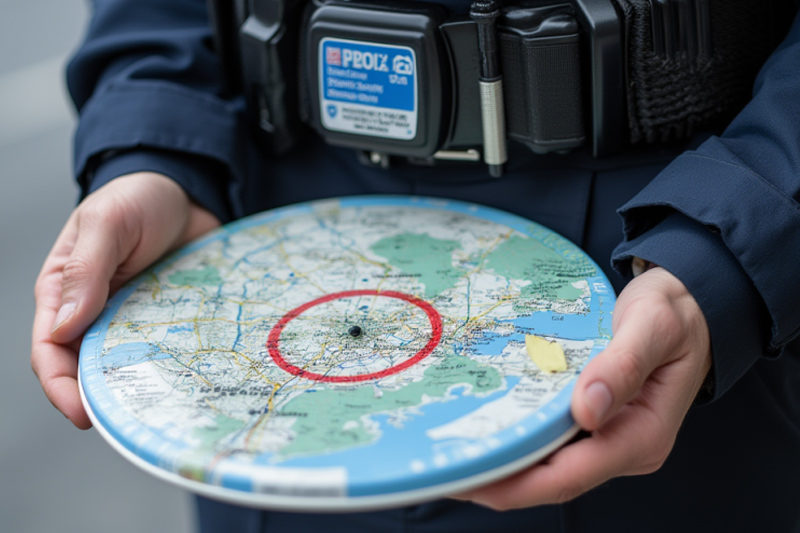
Smart city public safety refers to the construction of an intelligent management system covering all aspects of urban safety through new-generation information technologies such as the Internet of Things (IoT), big data, artificial intelligence (AI), and 5G. It enables real-time monitoring, early warning, disposal, and decision support for urban safety risks. Its core objective is to enhance the city's capability to address safety threats such as natural disasters, public health emergencies, public security crimes, and infrastructure failures, so as to protect the lives and property of citizens and ensure the stable operation of the city.
Global Long-Distance Communication Solution
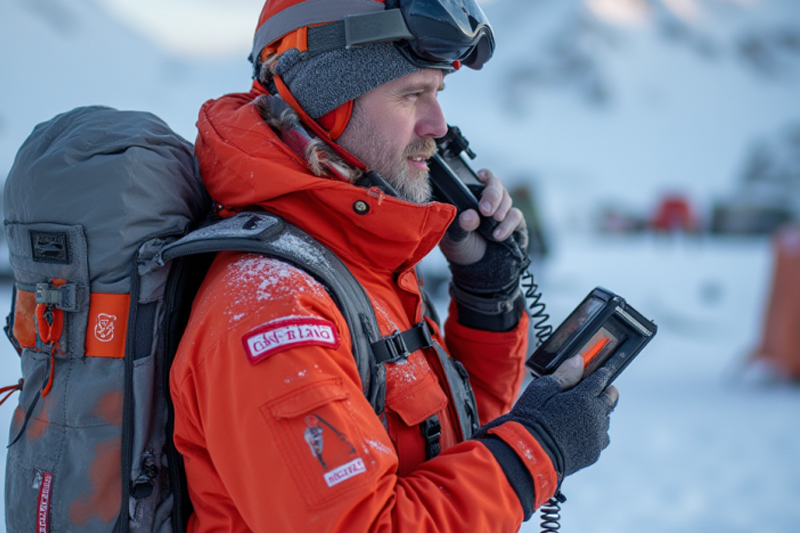
Leveraging multi-mode converged communication technology, this solution integrates satellite communication, public network intercom, BeiDou navigation, and emergency SOS functions to establish an "air-space-ground-sea" all-domain coverage network, breaking through the geographical limitations of traditional terrestrial communication. Long-distance communication is evolving toward "all-time, all-region, high-resilience, and enhanced emergency response" capabilities. Through technological synergy and terminal innovation, communication capabilities are being upgraded from "limited coverage" to "ubiquitous connectivity." Dual-mode terminals (satellite phones + public network intercoms) ensure uninterrupted communication in base station-free zones (e.g., oceans, deserts). Integrated SOS satellite alerts and BeiDou short message services guarantee reliable communication in extreme scenarios.
Enterprise Intelligent Office Communication Solution
Through technical solutions adapted to different scenarios, enterprises can achieve an office model of "seamless collaboration anytime, anywhere", while reducing communication costs and improving data security.In the future, with the development of 5G, AI, and edge computing, intelligent office communication will further evolve towards "scenario-based, adaptive, and unmanned" directions.